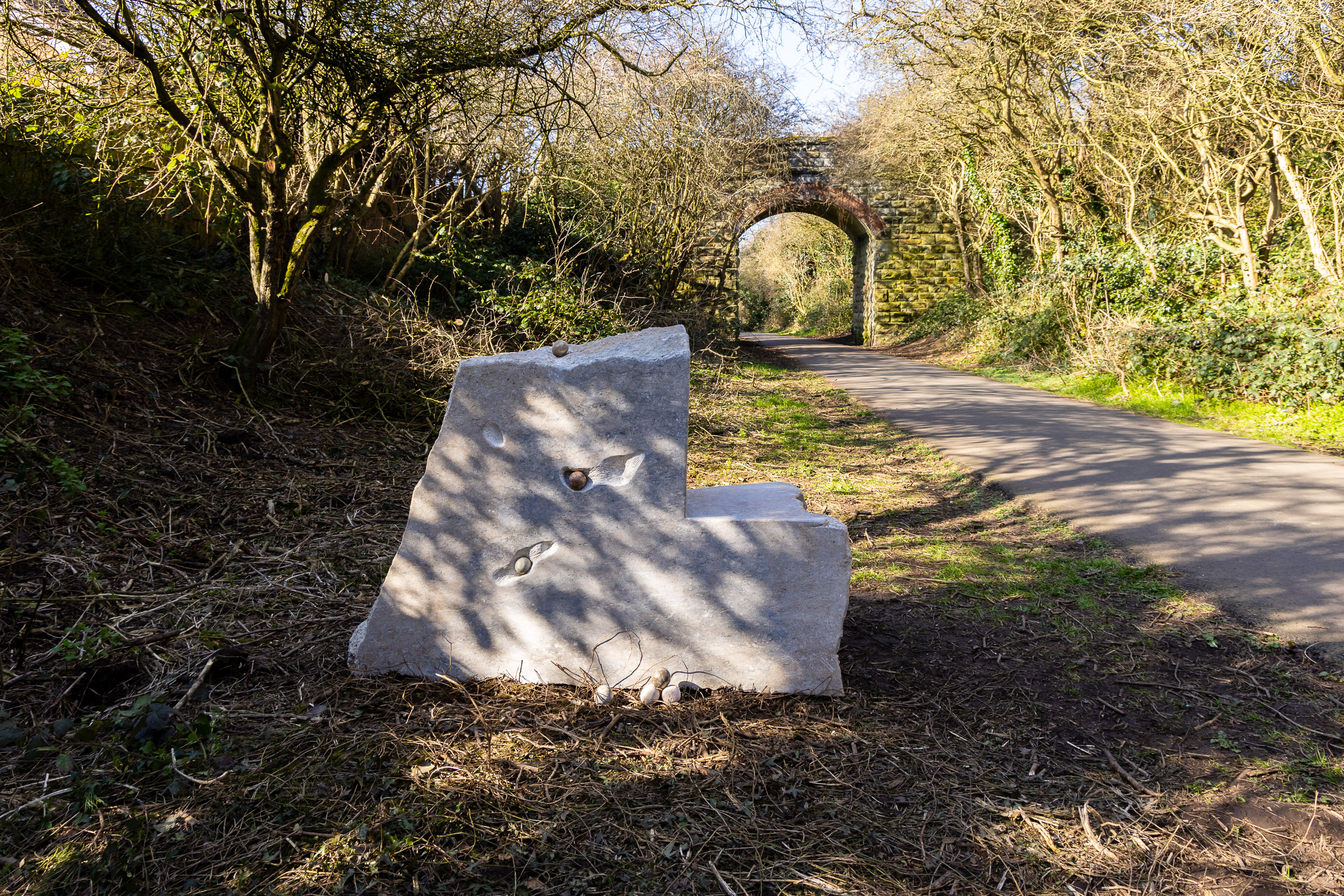





Emma Smith’s Wild Eye commission is a series of six multi-part outdoor artworks installed along Scarborough’s Cinder Track, a historic railway line, now a popular cycle route and footpath that also serves as an important green corridor for wildlife, produced in collaboration with local communities, conservationists and scientists.
A series of six multi-part works (five permanent and one living) are installed along the Cinder Track as dwell spaces for people and wildlife. Through multi-sensory experiences that reveal our interconnectivity, the artworks invite people to slow down, rest and attend to all living beings using the track.
The artworks are designed to support nature. Each sculpture also supports human health by bringing people into close proximity with nature which increases the micro-biome (good bacteria) in our bodies. Research shows that the closer our physical contact with nature the more likely we are to protect it.
‘Old Friends’ is a term used to describe the microbes that protect human health by regulating our immune systems. Close contact with the natural world increases the microbiome (good bacteria) in our bodies. Research also shows that greater physical contact with the natural environment increases our likelihood of protecting it for the future, of being a friend to nature.
Listen to an audio podcast on the work and watch a short video on it here.
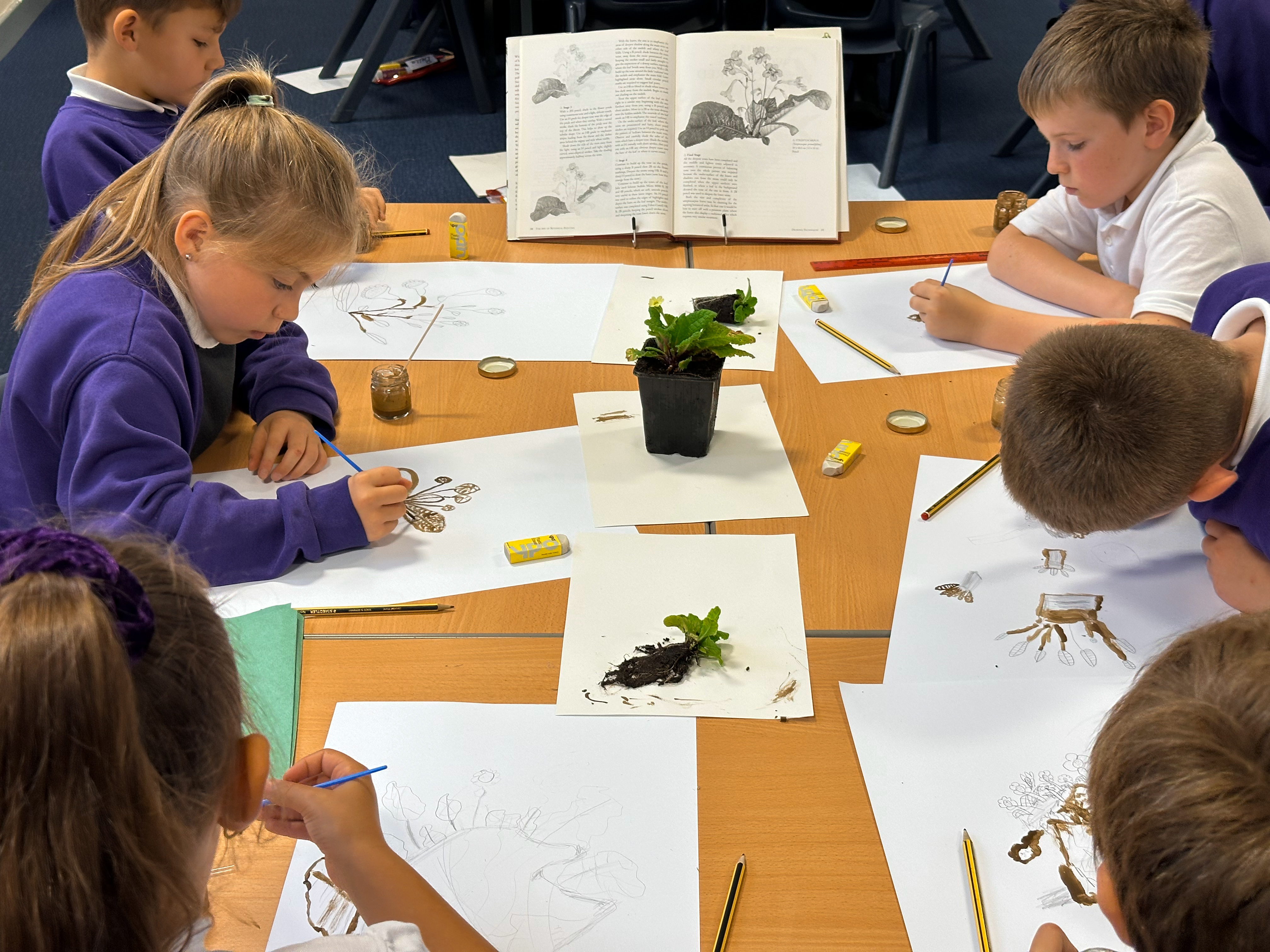
As part of the launch of Old Friends, the artist created a public poster trail, working with local school children to create a series of botanical drawings that illustrate a Cinder Track Seed Mix. The seed mix forms part of the artwork and were also be gifted to local communities from the Grow Scarborough seed bank at Scarborough Library.
The sculpture series features:
1. A living artwork comprising a sensory planted area with strongly scented flora, creating an olfactory experience that shifts perceptions and sense of place as you enter the track from the town, while providing support species for local bees and beetles.
2. A gathering area from which to forage, with furniture made for and from nature. Taking visual inspiration from the stacking of hay bales further along the track, Smith’s sculptural seating and tables, invite audiences to forage nearby fruits and then sit, eat and enjoy an area of grassland that will now be rewilded as part of the artwork to also provide foraging ground for hoverflies and butterflies.
3. A bio-adaptive stone sitting circle set within trees for children to play and make with found materials. This work is directly inspired by the geology of the area, and designed to connect to the microbiome of the ground.
4. A resting space for people, gastropods and arthropods inspired by the communal huddling of snails and woodlice within the walls of the railway line tunnels. This work includes seed balls that will gradually disperse, containing a custom made Cinder Track seed mix that will also be gifted to local residents.
5. Nesting spaces for humans that celebrate the importance of all stages of a tree’s life including the benefits of dead wood to nature. Audiences are encouraged to add windfall wood to their seat, then sit, breathe in and reflect on the interconnected health of trees and all lifeforms.
6. Listening and whispering holes in the walls of a viaduct, inviting passersby to listen to the diverse soundscape of Scalby Beck and then whisper their secrets to the bees, in line with an ancient tradition.
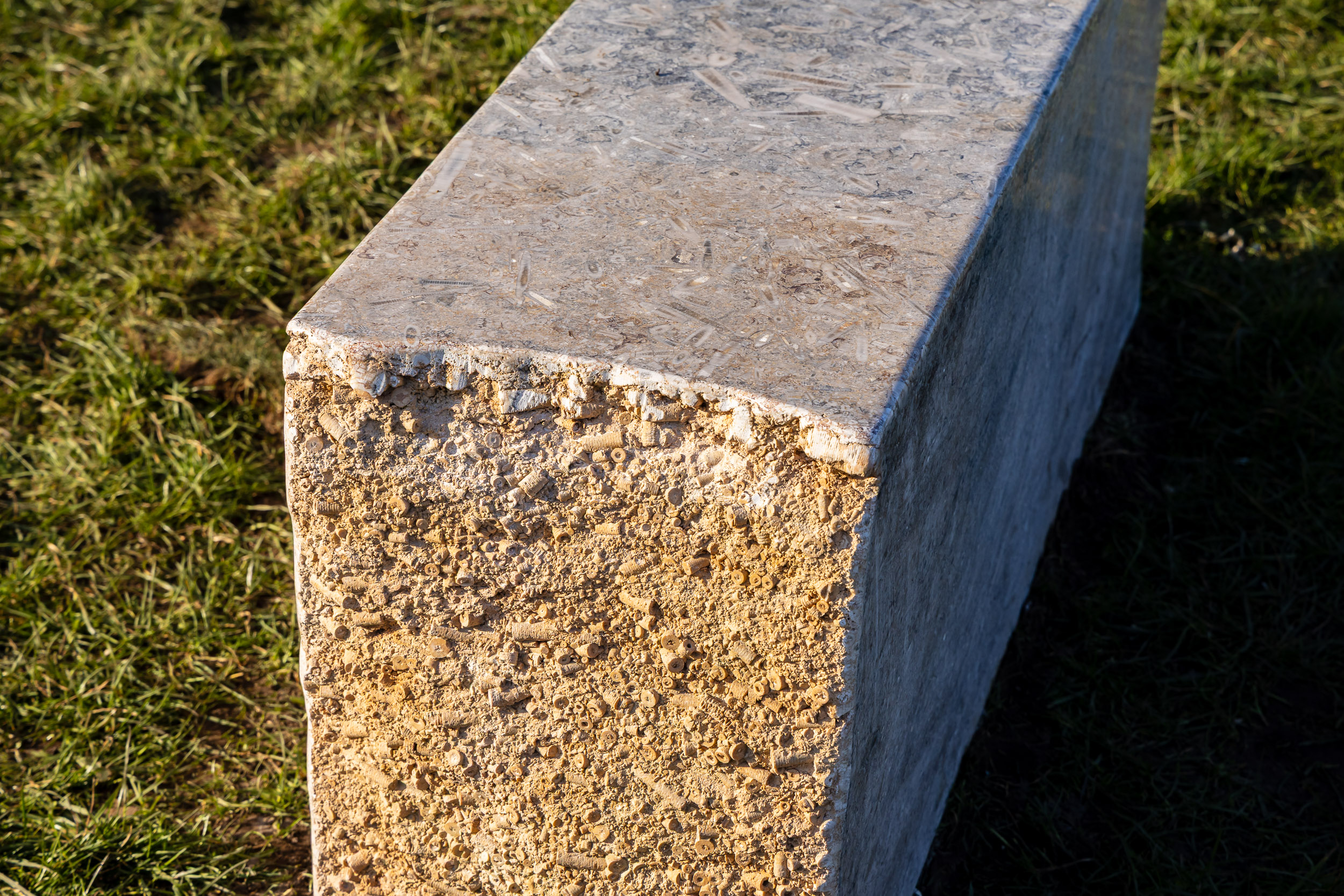
Each of the six site-specific commissions is crafted from fossilised stone – linking this inland area with the nearby marine environments that the track connects with. The works also include elements of soil, wood and seed and are designed to support the health of both the people using the track and the surrounding ecology.

 Jeanine Griffin
You must be logged in to post a comment.